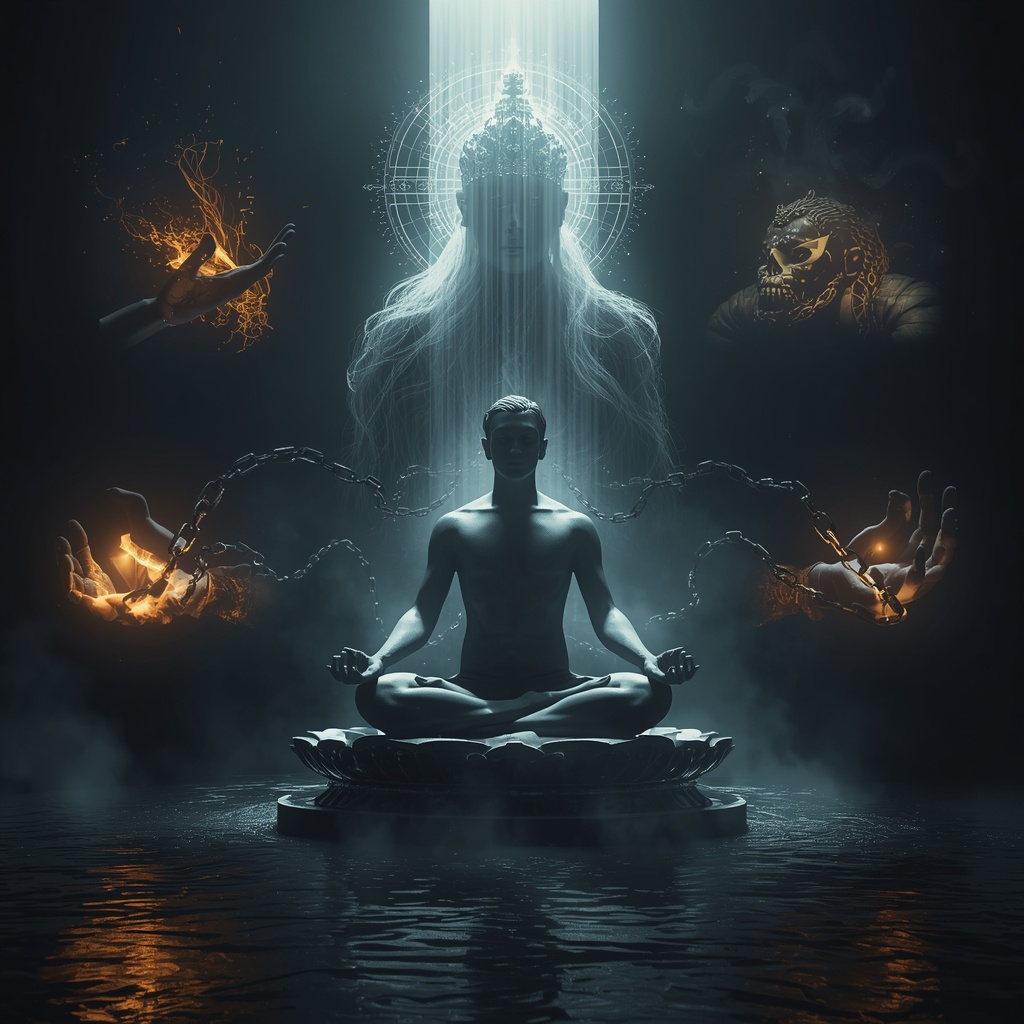
The modern understanding of Tapasya primarily portrays it as extreme austerities. It showcases it as complete ‘Sansar Tyag’ or giving up of worldly things in its entirety. This is perhaps one of the most incomplete interpretations of an ancient Bhartiya concept.
For most people, the word immediately brings to mind images of sages standing in forests for years, meditating in harsh climates, fasting endlessly, renouncing worldly pleasures, or inflicting suffering upon themselves in pursuit of divine blessings or attainment of siddhis (Supernatural powers). Somewhere along the way, Tapasya became synonymous with pain, punishment, denial and extreme austerity.
But I do not believe that was ever its true purpose.
The more one studies Bhartiya philosophy, Yogic traditions, Vedantic inquiry and even the stories scattered across the Puranas and Itihasas, the more it becomes evident that Tapasya was never merely about physical hardship. Yes Physical austerities are a crucial part of sadhana and are extremely potent external tools. The real process however was internal.
Tapasya, in its deepest sense, appears to be a systematic process of consciousness transformation.
A method designed to free the human mind from bondage to its natural vices and restore sovereignty over one’s inner world. Eventually it allows one to establish a stable connection between individual consciousness and what many traditions refer to as the universal consciousness, supreme consciousness or super-consciousness.
And perhaps this is why the ancient world treated Tapasya with such seriousness.
Not because it weakened a person.
But because it transformed them.
The Fragmented Nature of Human Consciousness
Ancient Bhartiya thought repeatedly suggests something deeply profound about the human consciousness.
Human beings are not suffering merely because of the external world. Rather the external world is just providing an impetus for human suffering. All suffering is internal.
They suffer because consciousness itself is unstable.
The mind is constantly pulled in different directions:
desire,
anger,
fear,
comparison,
attachment,
ego,
greed,
validation,
identity,
reaction.
A person may appear externally successful and yet internally remain completely enslaved by impulses they do not control.
This is where the concept of the Shadripu becomes extraordinarily important.
In Marathi and Sanskrit traditions, the Shadripu refers to the six inner enemies of consciousness:
- Kāma (Desire and Craving)
- Krodha (Anger and Reactive Emotion)
- Lobha (Greed)
- Moha (Delusion and Attachment)
- Mada (Egoic Pride)
- Matsara (Jealousy and Envy)
Modern interpretations often reduce these to moral flaws or sins. But I believe the Bhartiya understanding was far more psychologically sophisticated.
These were not merely “bad emotions.”
They were distortions of consciousness itself.
Each one negatively affected awareness.
Each one weakened inner stability.
Each one pulled the individual further away from clarity.
And most importantly:
each one prevented the mind from remaining connected to higher states of awareness.
This is where Tapasya begins to make sense.
Tapasya was not designed to punish human beings.
It was designed to free the human being from unconscious enslavement to the Shadripu.
Kāma – The First Fragmentation
Kāma is usually translated as lust or desire. But reducing it to sexuality alone misses the larger point entirely.
Kāma is compulsive craving.
The inability to remain internally complete without external stimulation.
The constant need for:
validation,
achievement,
pleasure,
recognition,
attention,
possession,
consumption.
Modern society has normalized this state so deeply that very few people even recognize it anymore.
We are conditioned to constantly chase something:
more success,
more money,
more visibility,
more approval,
more stimulation.
The mind rarely rests.
But a consciousness that is constantly craving cannot remain stable.
Tapasya, therefore, becomes the process of observing desire without immediately becoming enslaved by it.
Not suppression.
Mastery.
The transformation of craving into conscious intention.
Krodha – The Collapse of Awareness Through Reaction
Anger itself is not the problem.
Reactive consciousness is.
Krodha represents the loss of inner balance when external events begin controlling internal states.
A reactive mind loses clarity.
Perception narrows.
Discrimination weakens.
One impulsive moment can destroy years of wisdom.
This is why so many spiritual traditions place enormous emphasis on stillness, silence and observation.
Not because emotions are evil.
But because uncontrolled emotional turbulence destabilizes consciousness.
Tapasya trains the mind to observe reaction before becoming reaction.
And that changes everything.
Lobha – The Consciousness of Lack
Greed does not emerge from abundance.
It emerges from inner insufficiency.
A person consumed by Lobha can never experience completeness because their consciousness is trapped in accumulation.
No achievement is enough.
No possession is enough.
No success is enough.
The tragedy is that modern civilization often rewards Lobha while simultaneously pretending to condemn it.
But from a consciousness perspective, greed creates permanent agitation.
Tapasya gradually weakens this agitation by reducing dependence on external accumulation for internal stability.
Moha – The Great Illusion of Identity
Perhaps one of the deepest concepts in Bhartiya philosophy is Moha.
Moha is not merely attachment.
It is false identification.
Mistaking temporary constructs for ultimate reality.
Identifying entirely with:
the body,
the ego,
status,
opinions,
social identity,
success,
failure,
even spirituality itself.
A person trapped in Moha does not see reality clearly because perception is filtered entirely through attachment.
Tapasya weakens this false identification.
Not by rejecting life,
but by creating enough inner stillness to observe life without becoming completely consumed by it.
Mada – The Intoxication of the Ego
Mada is dangerous precisely because it can hide behind greatness.
Power,
knowledge,
wealth,
beauty,
intellect,
achievement,
spiritual progress,
all can become fuel for egoic intoxication.
And ironically, even spirituality itself can become another form of ego.
This is why many traditions repeatedly warn seekers about spiritual pride.
A person may conquer worldly desires while secretly becoming intoxicated with the idea of being spiritually superior.
That too is bondage.
True Tapasya does not inflate identity.
It dissolves unnecessary attachment to identity altogether.
Matsara – The Endless Corruption of Comparison
Jealousy is one of the most psychologically destructive states because it destroys inner peace without creating any real growth.
Matsara traps consciousness in comparison.
Another person’s success becomes personal suffering.
Another person’s growth becomes internal discomfort.
And in the modern digital world, this distortion has become constant.
Entire systems now thrive on comparison-based functioning.
Tapasya gradually restores attention back to the self.
Not the ego-self.
But the inner self.
The part untouched by social competition.
Tapasya as a Process of Consciousness Training
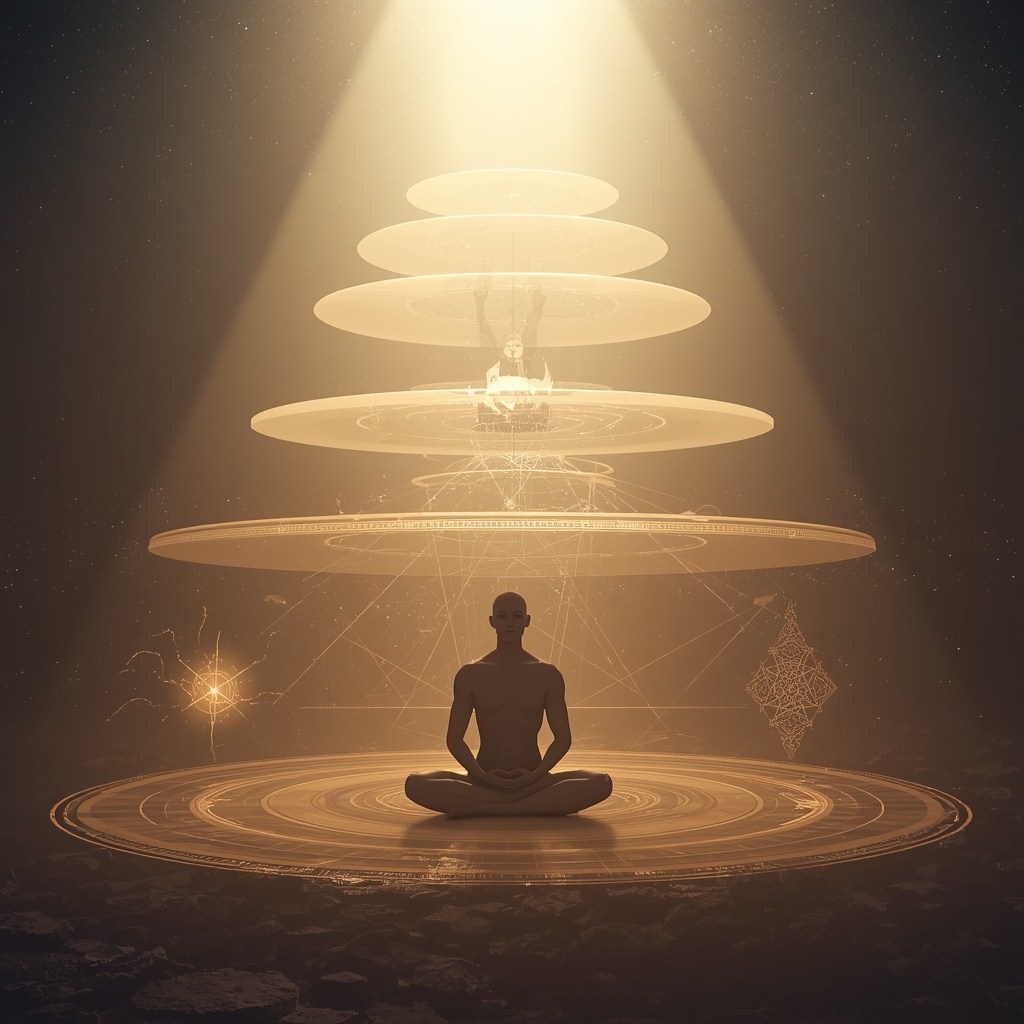
Once viewed through this lens, Tapasya begins to look less like religious austerity and more like a highly advanced system of consciousness training.
Silence was not merely ritualistic.
It trained awareness.
Meditation was not escapism.
It stabilized perception.
Fasting was not punishment.
It weakened compulsive dependency.
Brahmacharya was not merely celibacy.
It was preservation and direction of energy.
Mantra was not blind repetition.
It was consciousness alignment through sustained focus.
Solitude was not social rejection.
It was the removal of external noise.
The purpose of these practices was not suffering.
The purpose was mastery.
The gradual reclaiming of sovereignty over one’s own consciousness.
The Elevation of Consciousness
Ancient traditions repeatedly suggest that as the Shadripu weaken, consciousness itself begins to transform.
A person becomes:
less reactive,
less compulsive,
less ego-driven,
less emotionally unstable.
Perception sharpens.
Awareness deepens.
Intuition strengthens.
Silence becomes natural instead of uncomfortable.
One begins responding consciously instead of reacting impulsively.
And perhaps most importantly:
the individual consciousness begins experiencing moments of alignment with something far greater than the individual self.
Different traditions call this by different names:
Brahman,
Paramatman,
Universal Consciousness,
Pure Awareness,
The Divine,
The Supreme Reality.
But the underlying idea remains remarkably consistent.
The higher state was never “created.”
It was always present.
The problem was noise.
The Shadripu created fragmentation.
Fragmentation created instability.
Instability prevented connection.
Tapasya gradually reduces this fragmentation.
Siddhis and the Misunderstanding of Spiritual Power
One of the most misunderstood aspects of advanced spiritual traditions is the concept of Siddhis.
Modern interpretations either sensationalize them as supernatural powers or dismiss them entirely as mythology.
But perhaps Siddhis were never meant to be understood as magic in the simplistic sense.
If consciousness itself can evolve beyond ordinary limitations, then changes in perception, intuition, awareness and capability become natural possibilities.
Ancient texts repeatedly describe sages possessing extraordinary abilities:
heightened perception,
deep intuition,
telepathic understanding,
control over bodily processes,
expanded awareness,
energetic influence.
But what is fascinating is that serious spiritual traditions almost always issue the same warning:
Do not pursue Siddhis.
Because the moment power becomes the objective, the ego re-enters the process.
Kāma returns.
Mada returns.
Attachment returns.
And consciousness fragments once again.
The true purpose of Tapasya was never power over others.
It was mastery over oneself.
Siddhis, if they emerged at all, were considered secondary consequences of consciousness refinement, not the final goal.
The Emperor of Consciousness
Ancient civilizations admired kings.
Bhartiya philosophy admired sages even more.
That distinction matters.
A king may conquer kingdoms and still remain enslaved internally.
But one who has conquered the Shadripu becomes sovereign over consciousness itself.
Such a person cannot easily be manipulated through:
fear,
desire,
anger,
ego,
comparison,
or greed.
Their stability does not depend entirely on external circumstances.
Their awareness remains centered even amidst chaos.
This, perhaps, is the highest form of power imaginable.
Not domination over others.
But mastery over oneself.
And maybe this is why so many enlightened beings across traditions radiate an unusual sense of calmness.
Not because they escaped life.
But because life no longer controlled them unconsciously.
Why Tapasya May Matter More Today Than Ever Before
Modern civilization continuously amplifies the Shadripu.
Consumerism strengthens Kāma.
Outrage culture feeds Krodha.
Material obsession fuels Lobha.
Identity politics deepens Moha.
Social validation inflates Mada.
Social media intensifies Matsara.
The modern mind is constantly overstimulated, emotionally reactive and psychologically fragmented.
And perhaps this is why ancient concepts like Tapasya still remain deeply relevant.
Not as archaic rituals.
But as methods of restoring inner sovereignty.
Because ultimately, Tapasya was never about rejecting the world.
It was about ensuring that the world did not completely dominate consciousness.
The final goal was never suffering.
Never performance.
Never power.
It was freedom.
Freedom from unconscious compulsion.
Freedom from fragmentation.
Freedom from inner slavery.
And perhaps, through that freedom, the possibility of remaining connected to something infinitely greater than the self.


Leave a Reply