philosophy
-
The phrase “Aham Brahmāsmi”—अहं ब्रह्मास्मि—comes from the Bṛhadāranyaka Upaniṣad (1.4.10). It is a very important statement from our Vedic thoughts. Although it became popular again because of the show Sacred Games, the way it was used there is far from its original meaning. The grandeur and the worldly implication that was attached to this mantra…
-
After a long day of hunting deep in the forest, King Kartavirya Arjuna, accompanied by his vast army, came upon the quiet hermitage of Rishi Jamadagni, father of the warrior-sage Parashurama. The king, accustomed to the wealth of palaces and the scale of armies, was offered hospitality by the sage. He politely declined — not…
-
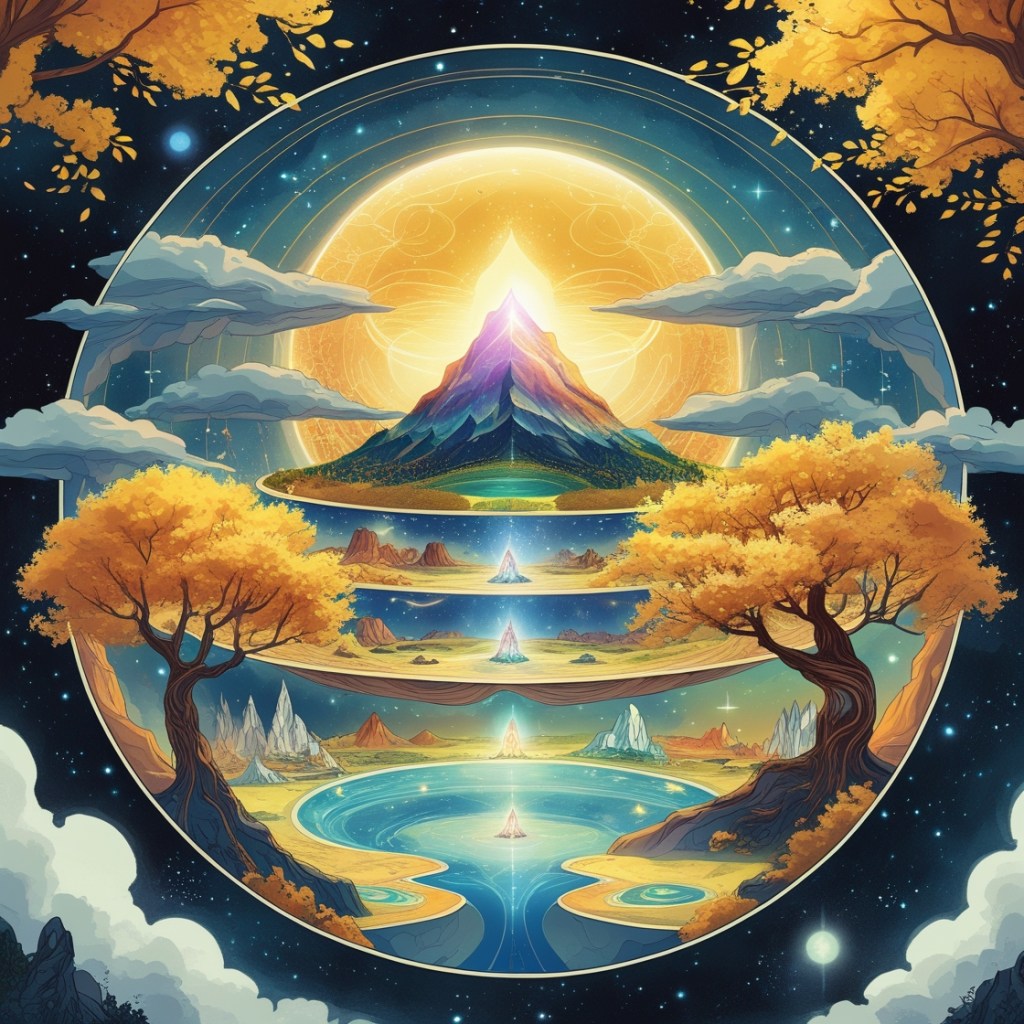
Introduction The Brahmanda Purana doesn’t describe the world the way we do. There are no continents as we know them, no national borders, and no familiar landmarks. Instead, we find vast lands like Jambu-dvipa, layered oceans, and mountain ranges taller than imagination. Each part of this world is filled with divine trees, radiant beings, and…
-
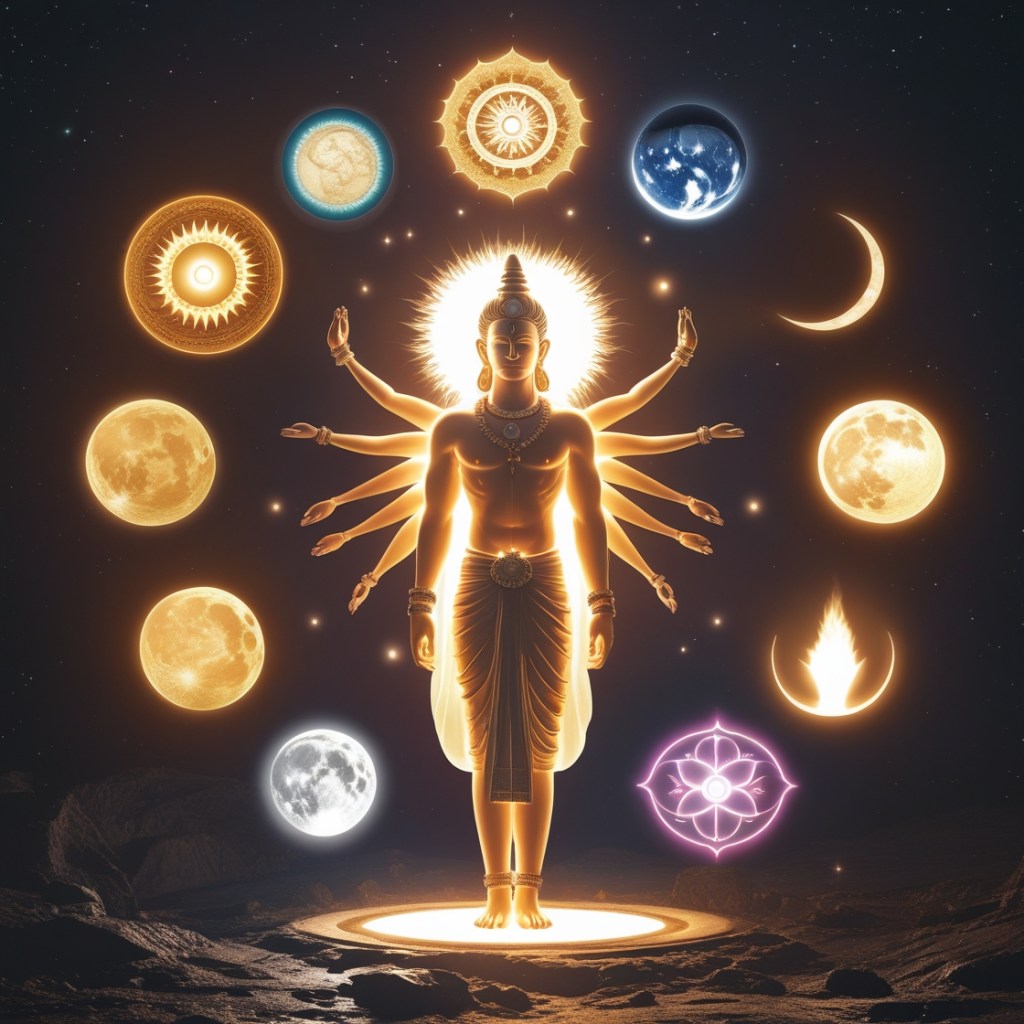
Introduction: When Divinity Cries In the great unfolding described in the Brahmanda Purana, creation doesn’t just occur—it emerges through dialogue, emotion, and elemental association. In a remarkable narrative sequence, Brahma bestows eight names to a crying divine child named Nilalohita, each name corresponding to a distinct body and elemental association. This divine child, in his…
-

As I continued reading through the Brahmanda Purana, something profound stood out: Not all dissolutions are violent. Some happen in perfect stillness. One passage describes it beautifully: “When the Kalpa was over… Kala was asleep.” “Maharishis remained for thousands of their nights… in sattva, waiting.” This is not destruction in the usual sense. It is…
-

Introduction: From Stillness, Everything Long before time-stamped history began, ancient seers described the origin of all existence not as a violent explosion, but as a quiet hatching. The Brahmanda Puraṇa speaks of a cosmic egg—the Brahmāṇḍa—enveloped in seven concentric sheaths, expanding in layers of energy and awareness. Within this shell, Bhagwan Brahma emerges and the…
-

Introduction: Time, Not as We Know It What is time, really? Is it the ticking of the clock, the change of seasons, the wrinkles on our faces? Or could it be something far more fluid, more mysterious—something we don’t move through, but that moves with us or through us? In my recent readings, I came…
-

What if creation wasn’t sparked by a bang, but by a breath or a thought arising in conjunction with that breath?What if the universe didn’t end in destruction, but withdrew into silence while all functions and beings slowly dissolved? The ancient Puranas—texts thousands of years old—speak not of explosive endings but of a gentle withdrawal.…
-

The Unshaken Boy — Retelling the Story Prahlada, the son of the powerful asura king Hiranyakasipu, was born into darkness but moved steadily toward light. While his father ruled with terror, Prahlada sat in stillness, chanting the name of Lord Narayana, deep in devotion to the luminous one. This was the very deity his father…
-
Introduction — A Palace That Travels Without Moving In the Vishnu Purana, there’s a moment that feels almost like science fiction—Lord Krishna, after building the grand city of Dwaraka, wishes to bring a magnificent celestial hall called Sudharman from the heavens down to Earth. But instead of having it built, he simply asks for it,…
 nakul sardesai