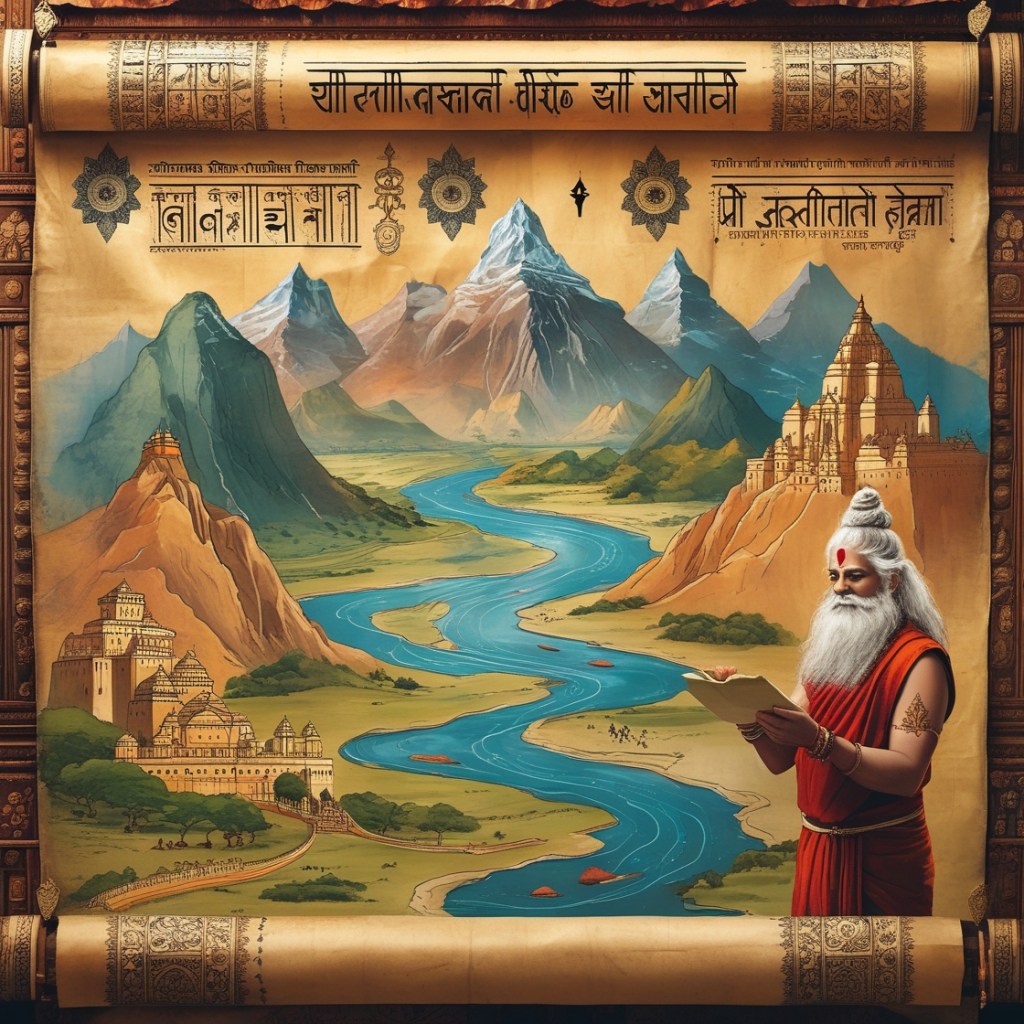
Sacred Rivers – The Lifelines of Ancient India
The Purana describes a vast network of rivers radiating in all directions from the Himalayas and other mountain ranges.
- Northern Rivers:
- Ganga, Yamuna, Saraswati, Sindhu (Indus) – flow from the Himalayas (present-day Uttarakhand, Himachal Pradesh, and Nepal into north India and Pakistan).
- Sarayu – Modern-day Ghaghara in Uttar Pradesh.
- Gomati, Gandak, Kosi – Still known by these names in UP and Bihar.
- Shatadru = Sutlej, Vipasha = Beas, Iravati = Ravi, Vitasta = Jhelum (all in Punjab/Kashmir).
- Chandrabagha = Chenab, flowing through Jammu and Kashmir and into Pakistan.
- Ganga, Yamuna, Saraswati, Sindhu (Indus) – flow from the Himalayas (present-day Uttarakhand, Himachal Pradesh, and Nepal into north India and Pakistan).
- Eastern Rivers:
- Tridiva, Rishikulya – likely rivers in Odisha and Andhra Pradesh.
- Kumari, Mandaga = Mahanadi, which flows from Chhattisgarh to Odisha.
- Subarnarekha = between Jharkhand and Odisha.
- Kaveri, Krishna, Godavari – major rivers of south and central India.
- Tridiva, Rishikulya – likely rivers in Odisha and Andhra Pradesh.
- Western Rivers:
- Tapi, Narmada, Sabarmati, Mahi – modern Gujarat and Madhya Pradesh.
- Tapi, Narmada, Sabarmati, Mahi – modern Gujarat and Madhya Pradesh.
- Southern Rivers:
- Tamraparni, Vaigai, and Palar – found in Tamil Nadu.
- Tamraparni, Vaigai, and Palar – found in Tamil Nadu.
Mountains – The Sacred Spines of the Subcontinent
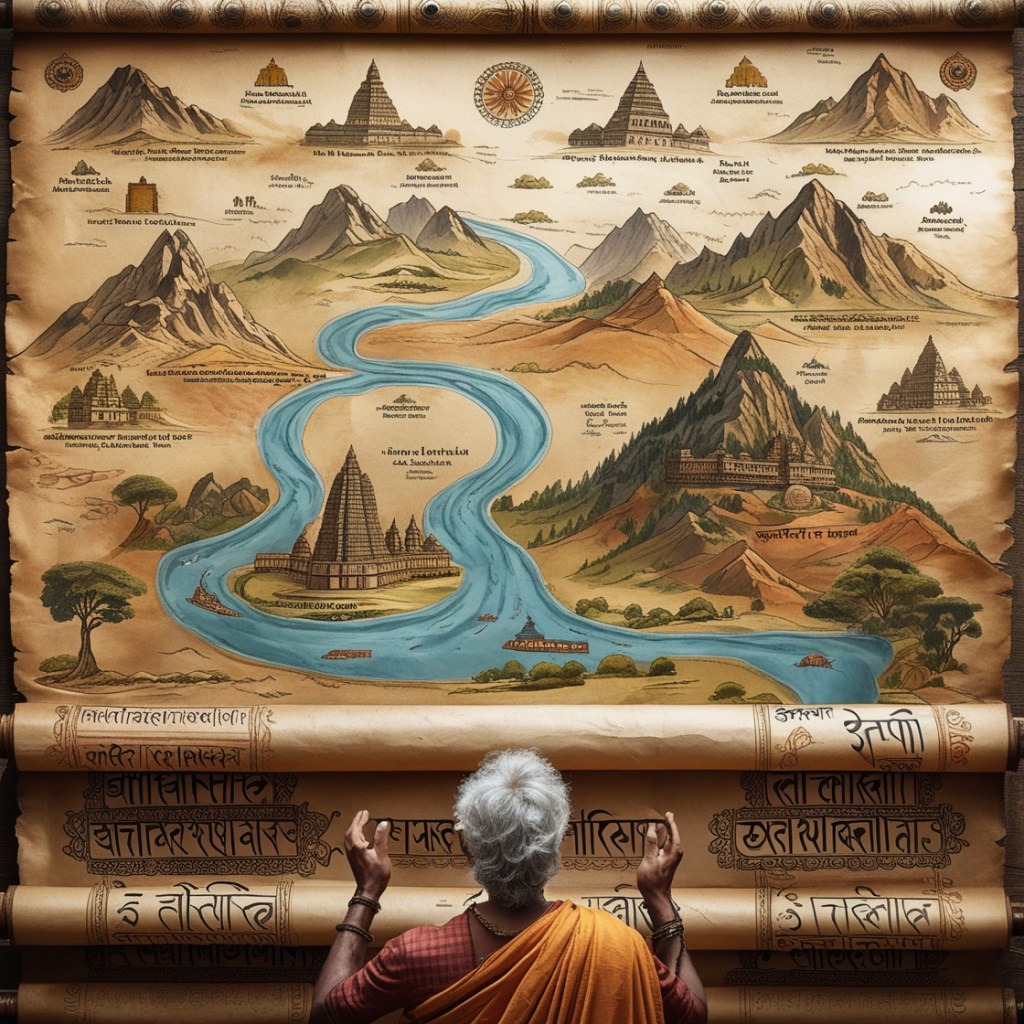
- Himalayas – the divine origin of rivers, described as the abode of gods and sages.
- Vindhyas – central Indian mountain range, defining the cultural north-south divide (Madhya Pradesh).
- Malaya – Western Ghats in Kerala/Tamil Nadu.
- Sahya – Northern Western Ghats, possibly Maharashtra-Goa region.
- Rishabha, Mandara, Mahendra, Trikuta, Shuktimanta – identified as peaks in Odisha (Mahendra Giri), or speculative locations across the eastern Ghats.
- Kumarika – Kanyakumari, the southern tip of India.
- Nishadha – Deccan Plateau area.
- Sumeru – symbolic central peak (often mythical, could refer to Mount Kailash or central axis of the world).
- Shuktimati – associated with the Vindhya region.
Kingdoms and Janapadas – The Cultural Landscape
The Purana lists ancient kingdoms that align with today’s states and territories.
- North and Central India:
- Kosala = eastern Uttar Pradesh.
- Kuru, Panchala = western Uttar Pradesh and Haryana.
- Magadha = Bihar.
- Videha, Malla, Lichchhavi, Anga, Vanga = Bihar, Jharkhand, and Bengal regions.
- Avanti = western Madhya Pradesh (Ujjain region).
- Chedi = Bundelkhand (MP-UP border).
- Kosala = eastern Uttar Pradesh.
- Western India:
- Saurashtra = Gujarat.
- Kamboja, Sindhu, Gandhara = Afghanistan, Pakistan, and Kashmir region.
- Maru = Rajasthan (especially Marwar).
- Malava = Malwa plateau (MP and Rajasthan).
- Saurashtra = Gujarat.
- Eastern India:
- Odra, Utkala, Kalinga = modern Odisha.
- Pundra, Gauda = Bengal region.
- Rarh = Western Bengal and eastern Jharkhand.
- Odra, Utkala, Kalinga = modern Odisha.
- Southern India:
- Dravida, Chola, Chera, Pandya = Tamil Nadu and Kerala.
- Andhra, Kuntala, Karnata = modern Andhra Pradesh, Karnataka.
- Mahisha, Kishkindha = central-southern Karnataka and coastal regions.
- Pulinda, Sabaras = Tribal and forested areas of central India (MP, Chhattisgarh).
- Vanavasi, Abhira, Mushika – tribal and southern coastal areas (Maharashtra to Kerala).
- Dravida, Chola, Chera, Pandya = Tamil Nadu and Kerala.
- Northeast & Beyond:
- Kirata, Kiratakas = Himalayan and Northeast tribal areas.
- China, Tusharas, Hunas, Yavanas – refer to outer tribes beyond traditional India (Tibet, Central Asia, Greeks, etc.).
- Shakas, Pahlavas, Bahlikas – tribes from Central Asia or northwestern frontiers.
- Kirata, Kiratakas = Himalayan and Northeast tribal areas.
Civilizational Reach
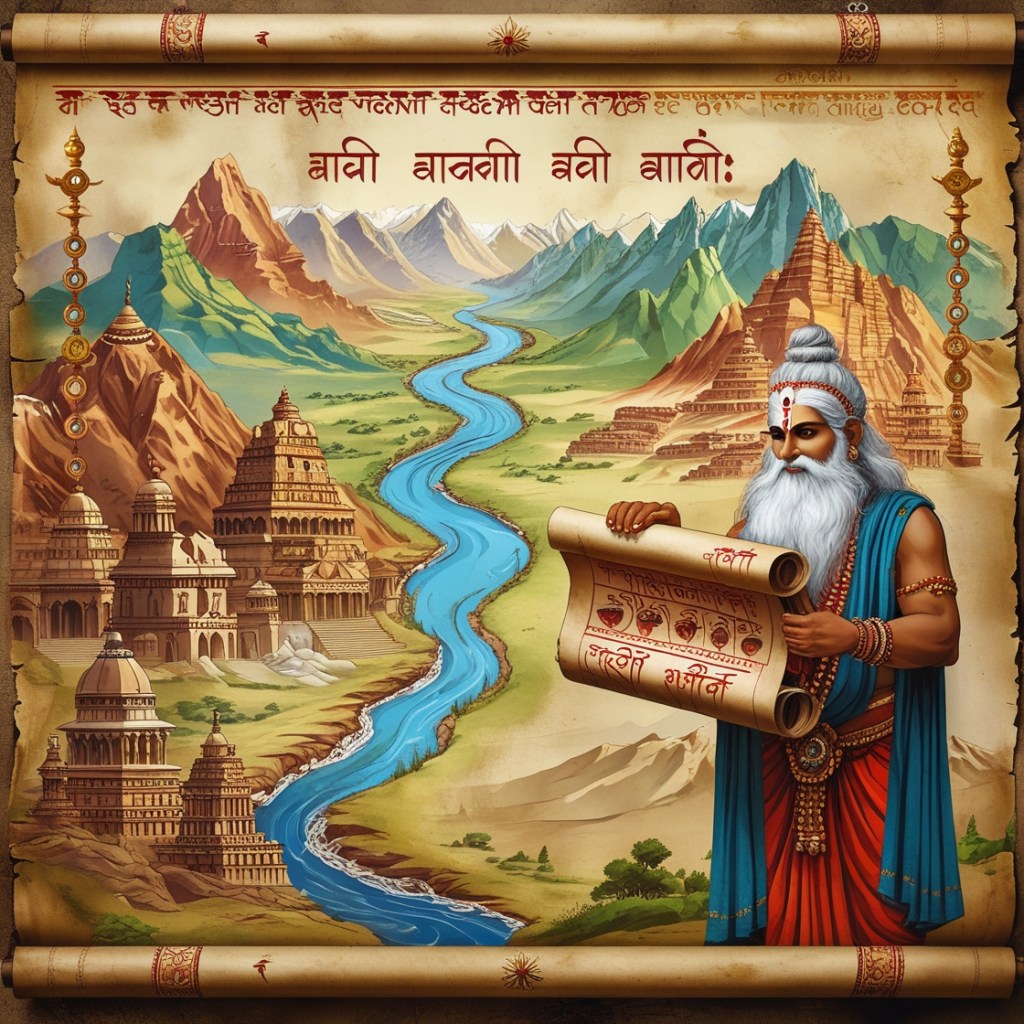
The reach of Bharatavarsha, as per the Brahmanda Purana, goes beyond just present-day India:
- To the northwest: Into Afghanistan, Pakistan, parts of Iran and Tajikistan (Gandhara, Kamboja, Bahlika).
- To the southeast: Mentions of Sumatra and Borneo (as Soma/Varuna islands), hinting at Indonesian archipelago ties.
- To the northeast: Tribal lands of Tibet, China, and Southeast Asia.
- Across the Indian Ocean: Possibly symbolic or actual sea routes to Lanka, Maldives, and Southeast Asia.
🌸 Summary: Bharatavarsha – Not Just a Nation, But a Sacred Geography
From the Himalayas to the oceans, the Brahmanda Purana envisions Bharatavarsha as a civilizational landscape bound by:
- Rivers that flowed like veins of sacred energy,
- Mountains that acted as spiritual beacons,
- Communities diverse in language, origin, and custom, yet united in dharma and cosmic alignment.
This is simply an attempt to interpret and compare the descriptions from the Brahmanda Purana translation I am currently reading with what those places and features might correspond to in today’s geography. It is not intended as a definitive claim or scholarly assertion, but rather a reflective exploration of how ancient narratives might align with the modern world.
 nakul sardesai
Leave a comment