Introduction: When Divinity Cries
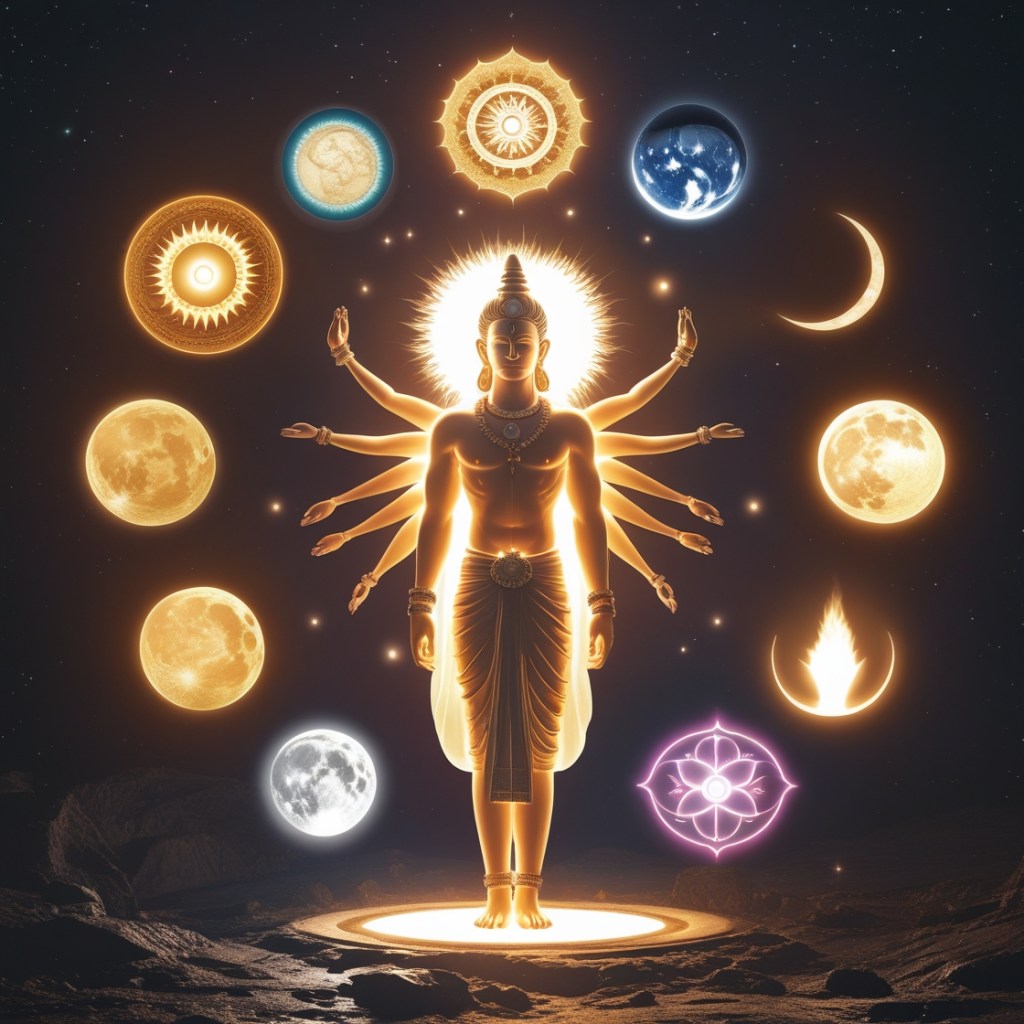
In the great unfolding described in the Brahmanda Purana, creation doesn’t just occur—it emerges through dialogue, emotion, and elemental association. In a remarkable narrative sequence, Brahma bestows eight names to a crying divine child named Nilalohita, each name corresponding to a distinct body and elemental association. This divine child, in his sadness and cosmic purpose, becomes Rudra.
This post is a reflection and synthesis of a powerful portion of the Purana that presents a cosmology of names, energies, and sacred embodiment. It isn’t just mythology—it’s a layered metaphysical map of how divine forces animate the universe.
The Eight Names of Rudra and Their Elemental Bodies

When Brahma encountered the crying divine boy, he asked him again and again why he wept. Each time, the boy begged: “O Lord! Give me a name.”
Brahma, in response, granted him a name and a body. The story goes:
- Rudra — “Your first body will be the Sun.”
- Element: Light/Illumination
- Function: He provides visibility and radiance. Hymns to this Rudra are chanted at sunrise.
- Element: Light/Illumination
- Bhava — “Your second body will be Water.”
- Element: Life-sustaining flow
- Function: Described as the juice that nourishes all beings; hence, Bhava is connected with creation and fertility.
- Element: Life-sustaining flow
- Sharva — “Your third body will be Earth.”
- Element: Stability
- Function: His energy is grounded, associated with the bones and strength of creation.
- Element: Stability
- Ishana — “Your fourth body will be Wind.”
- Element: Breath
- Function: The wind that sustains life, also the movement of thoughts and spirit. Ishana governs subtlety and prana.
- Element: Breath
- Pashupati — “Your fifth body will be Fire.”
- Element: Transformation
- Function: Agni, fire as purificatory and consuming force; Pashupati is lord of living beings.
- Element: Transformation
- Bhima — “Your sixth body will be Space.”
- Element: Ether
- Function: This form pervades all; it is where sound and subtle vibrations exist.
- Element: Ether
- Ugra — “Your seventh body will be an Initiated Brahmana (Dikshita).”
- Element: Consciousness/Knowledge
- Function: Associated with sacred speech, fire rituals, and cosmic law. Those who break dharma face his wrath.
- Element: Consciousness/Knowledge
- Mahadeva — “Your eighth body will be the Moon.”
- Element: Emotion/Reflection
- Function: This Rudra protects during rituals performed under full or new moon. Associated with coolness, rhythm, and cycles.
- Element: Emotion/Reflection
After naming him Mahadeva, the divine child stopped crying. With these names, forms, and abodes, Brahma sanctified aspects of the universe.
Elemental Placement: The Abodes of Each Name
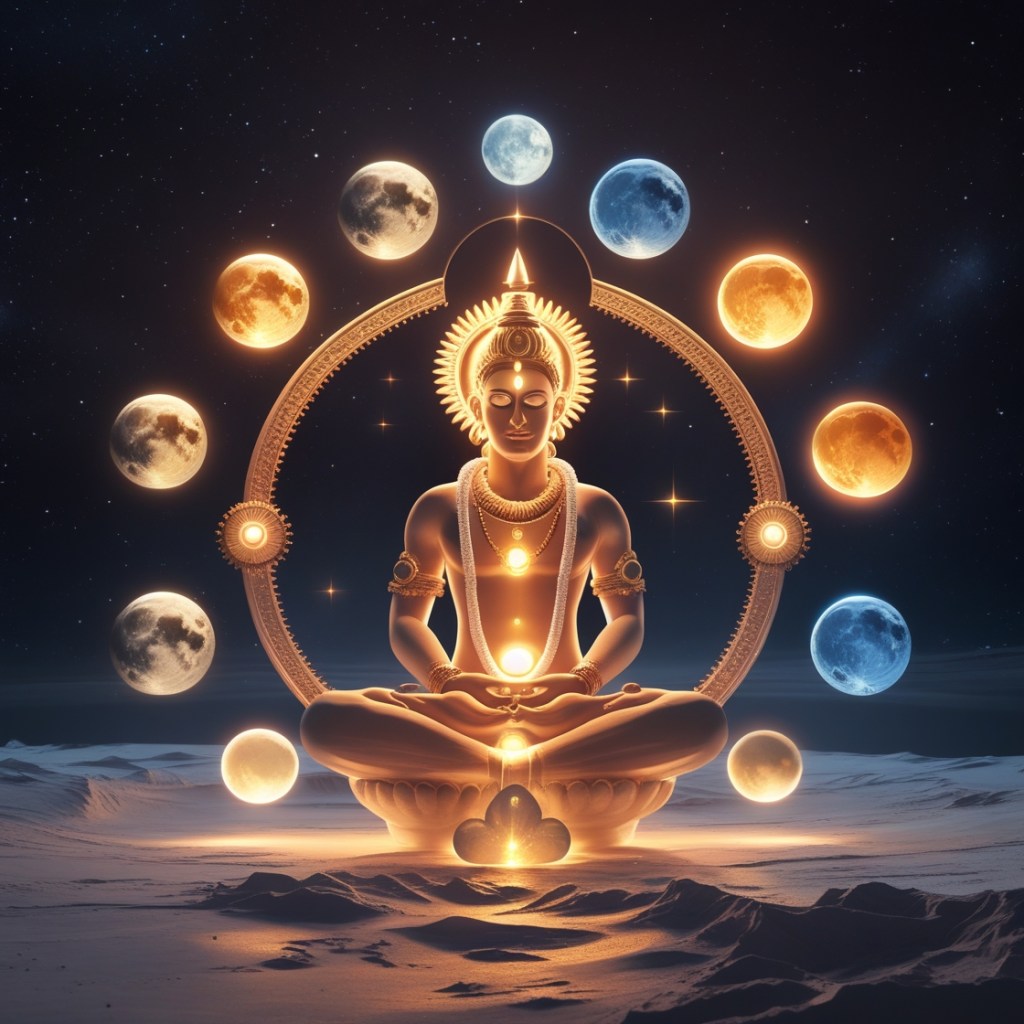
Swayambhu then placed each of these Rudra forms in elemental abodes:
- Sun for Rudra
- Water for Bhava
- Earth for Sharva
- Wind for Ishana
- Fire for Pashupati
- Space for Bhima
- A Brahmana consecrated through diksha for Ugra
- The Moon for Mahadeva
This isn’t just symbolic. Each element becomes a manifested body of divine principle. The wind is not just air—it is Ishana’s presence. The moon isn’t just a rock—it’s Mahadeva’s reflection.
Observances, Offerings, and Sacred Caution
The Purana also advises on how these elemental forms are to be respected:
- Do not pollute waters; they are Bhava’s form.
- Do not disrespect wind, fire, or space; they are divine bodies.
- Never insult or abuse a Brahmana initiated in sacred rituals; he embodies Ugra.
This is not dogma—it’s sacral ecology. A worldview in which divine presence permeates nature, and therefore all acts are spiritual acts.
What Might This Mean in Reality? (A Seeker’s Lens)
What if these aren’t just poetic designations, but hints at a deeper architecture of reality?
- Could each name represent a state of human experience—from the clarity of Rudra (Sun) to the emotional tides of Mahadeva (Moon)?
- Is this also a mapping of how consciousness expresses through matter—as radiance, flow, solidity, movement, transformation, subtlety, wisdom, and rhythm?
- Could the idea that Brahmana initiates to embody Ugra be a way of saying that intense knowledge carries karmic weight and sacred risk?
And most provocatively:
What if the crying of the divine child wasn’t sorrow, but a metaphor for the soul’s longing to become fully manifest?
Each name calms the crying. Each elemental form grounds that divine potential. Perhaps naming, in this context, is not about labels—but about vibration aligning with purpose.
And maybe this story isn’t about “Gods out there,” but energies within us waiting to be named, honored, and embodied.
Final Reflection: Rudra as the Cosmic Integration
This section of the Purana reminds us that divinity is not centralized in a temple or figure. It’s decentralized, dispersed, elemental. Rudra is not one being—he is the very architecture of light, breath, matter, movement, memory, and mind.
These eight names aren’t just labels. They are states of sacred being.
And perhaps, in seeking divinity, we are simply being invited to recognize it everywhere—in sun and water, fire and space, ritual and moonlight, wind and wisdom.
 nakul sardesai
Leave a comment