
As I continued reading through the Brahmanda Purana, something profound stood out:
Not all dissolutions are violent. Some happen in perfect stillness.
One passage describes it beautifully:
“When the Kalpa was over… Kala was asleep.”
“Maharishis remained for thousands of their nights… in sattva, waiting.”
This is not destruction in the usual sense. It is withdrawal.
Time itself, Kala, folds in. Space goes silent.
No fire, no storm. Just a still ocean, pervaded by Narayana, radiant even in dissolution.
A Universe in Tamas, Not Chaos
The scriptures tell us:
- When Brahma reaches the end of a Kalpa, he is overcome by tamas—not evil, but a dense stillness, a thick quiet.
- When Tamas reigns, Kala ceases to flow.
- Creation isn’t reversed—it’s put to rest.
“He becomes Kala, and devours it again.
He becomes Narayana, and lies down in the waters.”
Here, Brahma becomes Time, and Time becomes sleep.
This is a moment where even divinity returns to its seed state.
And in the silence of the deep, the four Yugas dissolve, all beings merge, and only the eternal waters remain.
Narayana as the Residual Flame
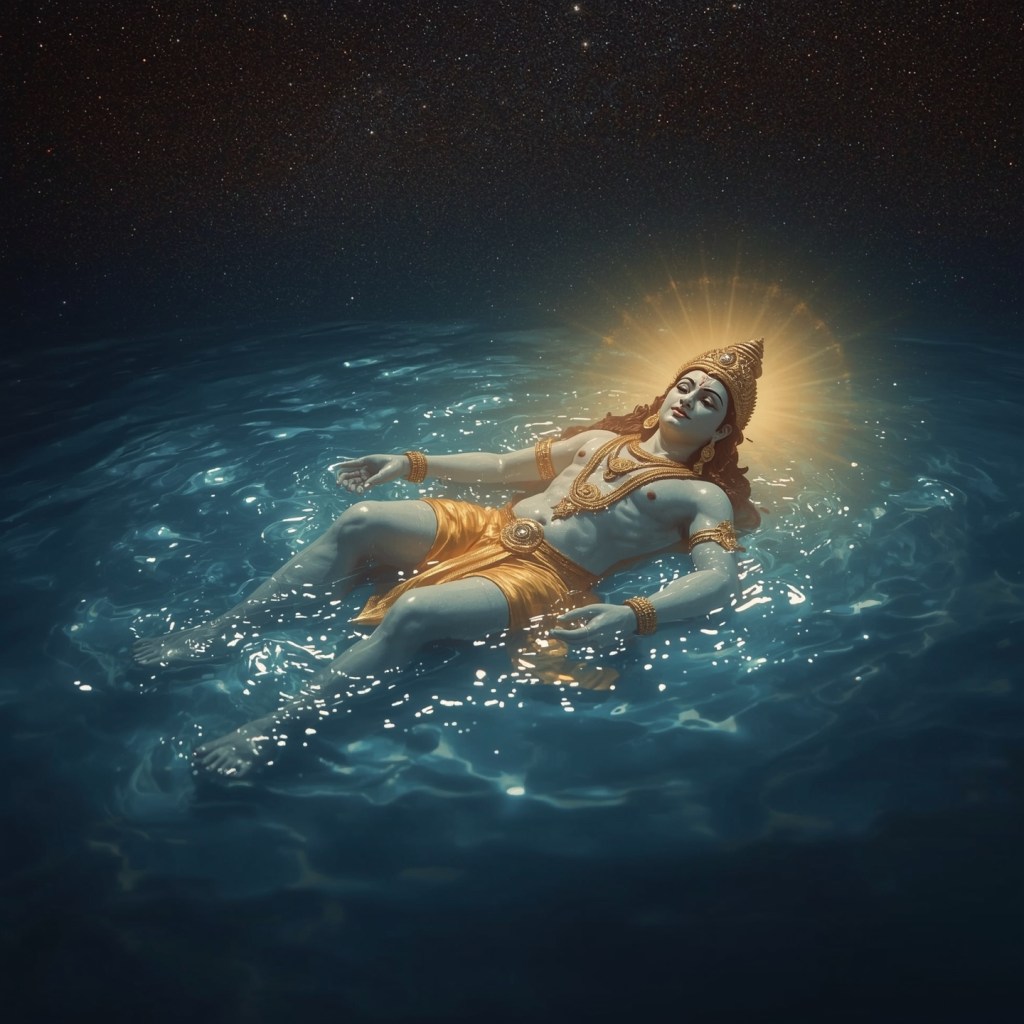
And yet, in this stillness—there is light.
The Purana says:
“There was water everywhere. At that time, Brahma, known as Narayana, was himself radiant in the water.”
This doesn’t contradict what we know from other texts. In many traditions, Narayana represents the ultimate state of divinity—consciousness unencumbered by creation.
So while Brahma dissolves back into the egg, it is Narayana who persists, untouched, illuminating the ocean of pause. He does not command. He holds.
Not active will, but conscious presence.
Kalpa as Cosmic Memory
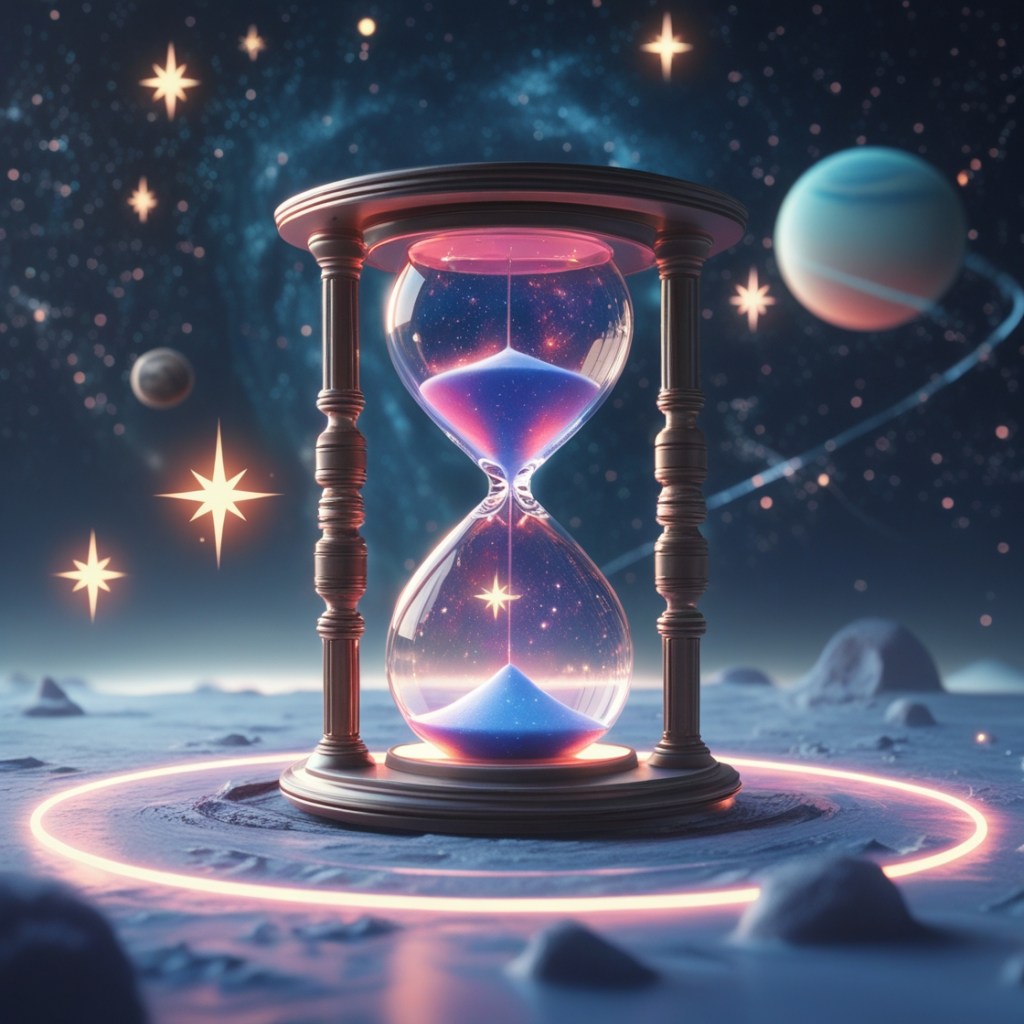
What fascinates me is that the Kalpa is not just time passing—it’s Time with Memory.
The Purana mentions:
“The present is an intervening period between the past and what will come.”
The cosmos remembers.
And what lies between two Kalpas is not erased—it’s stored, folded, carried inward.
Isn’t that how we work too?
Between two life chapters…
Between two breaths…
Between two identities…
We too enter our own Maha-Nidra, our own silent pause.
We carry memory—not to repeat, but to become.
A Moment of Interpretation
There are cryptic hints here that stir more questions:
- The text calls Nara “water” and Ayana as “path.” The term Narayana then literally becomes “the One who moves in the waters.”
Waters of what? Perhaps conscious energy, or consciousness itself. - It also hints that the first being (Purusha), when he manifests again, is golden and full of power, with a thousand heads and eyes.
Not a literal being—but perhaps the awakened, radiant field of reality itself. - Time doesn’t begin again. It awakens.
Like a being who has rested deeply and now stirs with purpose.
Between Kalpas, Within Us
If the universe has a silence between creations, maybe so do we.
Maybe:
- What we call confusion or emptiness is just our Kala asleep.
- What we call burnout is Tamas requesting its turn.
- What we call waiting is really the cosmos breathing in.
And maybe stillness isn’t inaction—it’s alignment with a deeper rhythm.
A place where even gods wait, and Time curls inward.
Closing Reflection
Reading this text in the quiet of the morning, it didn’t feel like I was learning something new.
It felt like I was remembering something old.
Something stored inside me between my own Kalpas.
When even Time rests,
The soul begins to listen.
 nakul sardesai
Leave a comment